Tutorial – Deadzone Terrain Part 2

Continuing on from the other days post on the Deadzone terrain; Part 1, I’m going to continue to show you how I painted up my set of terrain.

We left off with the salt still on the model, but the main colours laid down. Removing the salt is a fairly easy process, all you need is a mug of hot water and a light brush. The first step is to paint a coat of water over the whole of the model very gently and leave to soak in for a few minutes. Following this it’s a case of wetting the brush and lightly going over the areas where you can see salt. It should start to lift off fairly easily. For some more pronounced areas of chipping you can use a harder brush, such as a drybrush, to brush away the paint rather than just relying on the salt to give the effect. Most of the larger areas you’ll see on my terrain were created by doing this.

Once you have the desired areas taken away it’s worth leaving the model to cool and then give it a quick rinse under the tap. This helps clear away any residue left over by the process.

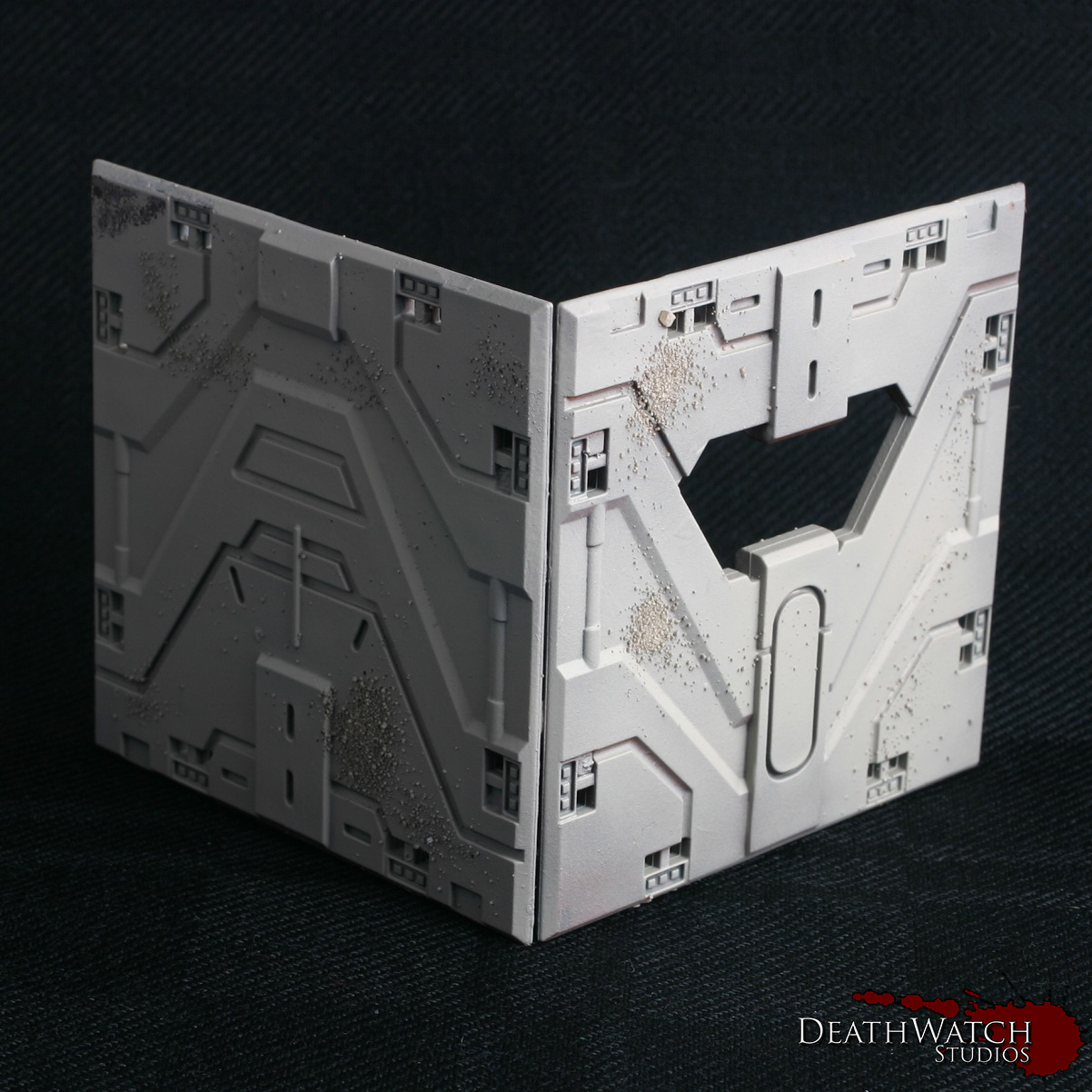
Once all that was done I ended up with something that looks like this:

Terrain-guide-6The next stage is to make it look a little nicer with some highlights. Using Ceramite white I gave it a fine edge highlight along the top of all the hard edges. Also to give a 3d effect to the paint chips I added a highlight to the bottom edge of each wee bit. This can take a wee while, but the effect you get from it is definitely worthwhile, and if your doing salt masking I would say essential. This is how it turned out:

Terrain-guide-7As you can see it really enhances the whole look 🙂

The next stage was all of the metals. To start them off I gave them a good basecoat of Warplock Bronze:
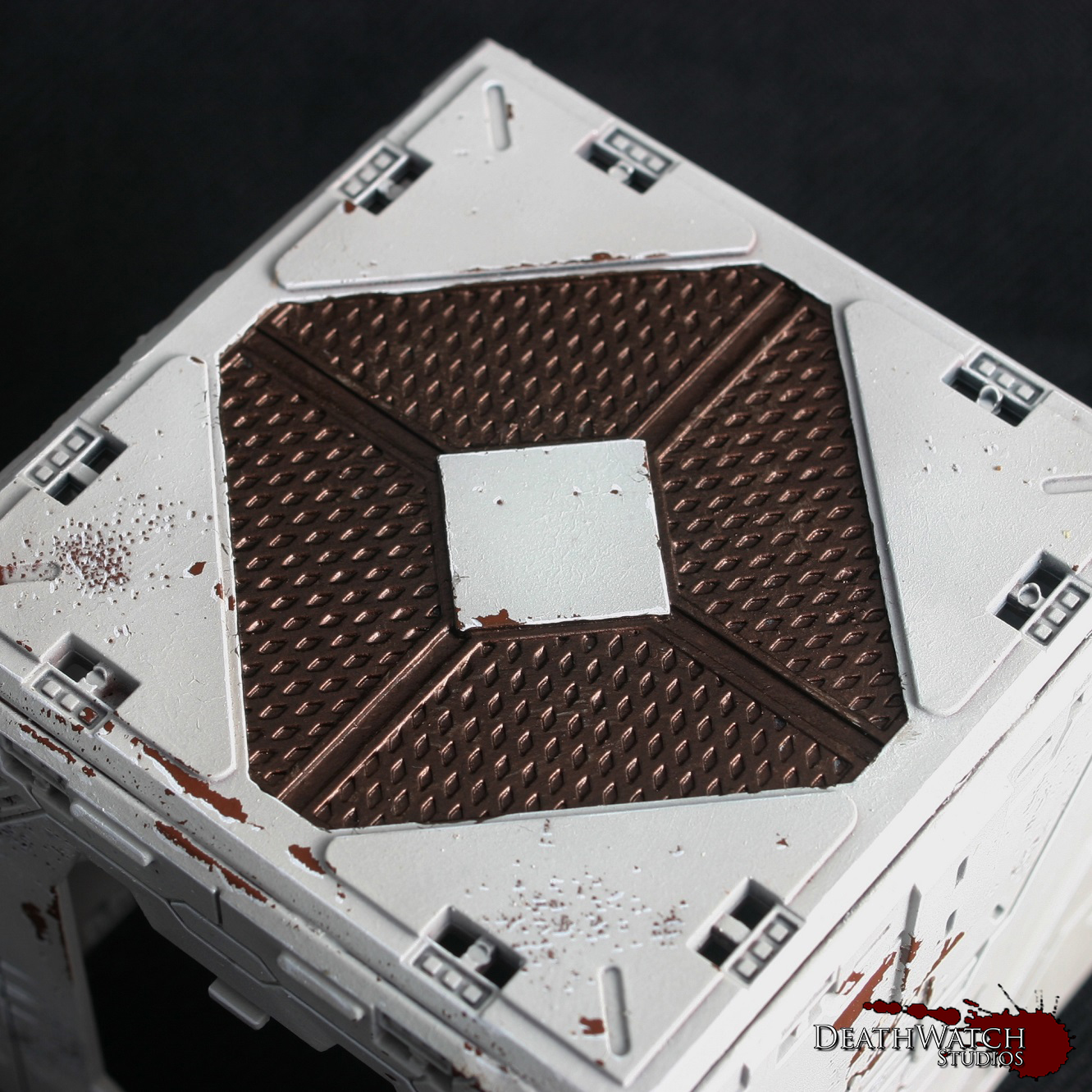
Terrain-Guide-8Which was followed by a drybrush of Leadbelcher:
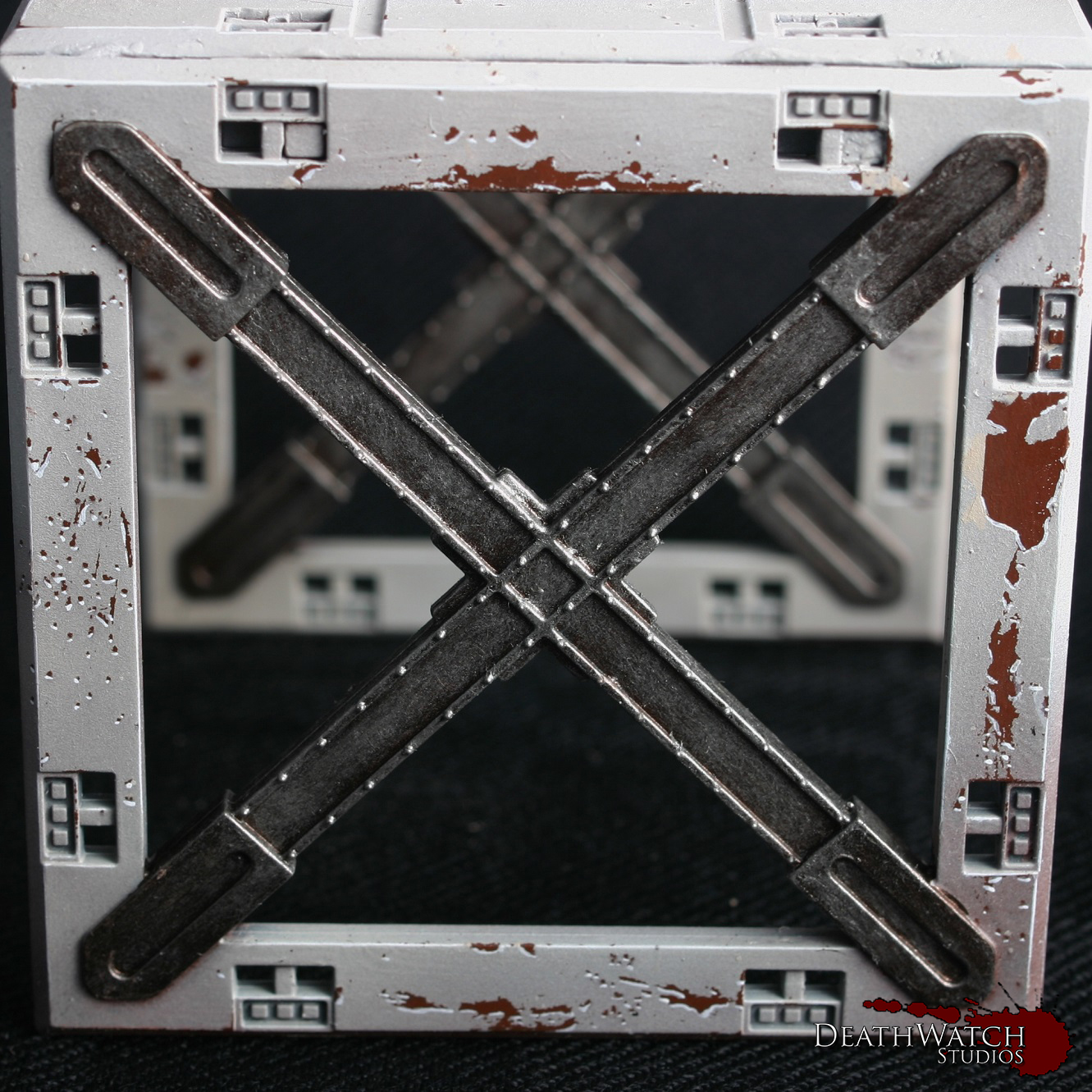
Terrain-guide-9To finish this off and tone it back a little it was then given a wash of Agrax Earthshade.

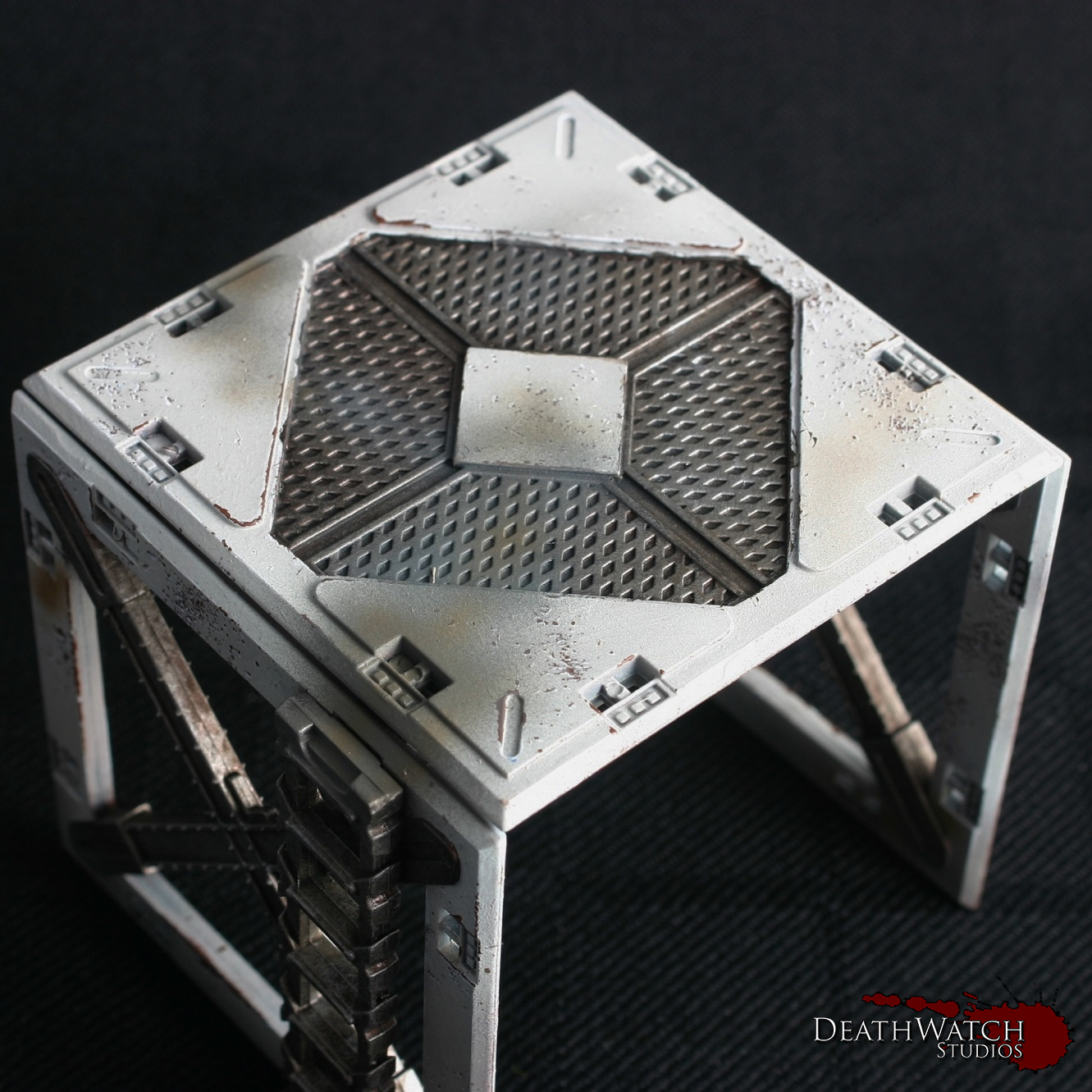
At this stage the bulk of the work is done and the terrain looks pretty good, but to really make it pop there was a few bits of detailing still to add. The first of these was a little bit more airbrushing, although drybrushing would certainly work just as well for them. I started by giving them a light dusting of Mechanicus Standard Grey along any section that would be touching the ground, this was to represent general dust and dirt kicked up around the buildings. The second was a dusting of XV-88 mixed with a little Dryad Bark sporadically over the terrain to add to the grimy, used nature of the buildings:

Terrain-guide-10A also used the same colours and effect on the tops of some of the terrain and the walkways to try and show the areas in which troops would have been moving about and the dirt and grime from there boots has dirtied the ground:
Terrain-guide-16Another touch I wanted to add was some weapon fire effects/burning. I used the same brown as previously to set down a base, adding small dots for laser fire markings and a larger area on some of the vents:

Terrain-guide-11 Terrain-guide-14I then added some black to the mix and added a smaller amount in the centre to finish off the effect.

Next up was blood splatter. Gotta have some blood splatter 🙂

I used the GW technical paint BLood for the Blood God for this, and have to say it is fantastic. Straight out the pot it looks great. The main difficult thing about it is just getting the shape and consistency of the splatter looking like it actually would. I would recommend taking it slow and steady, but also looking at some resources to see how real blood splatters. It sounds grim, but it helps. You also want to remember gravity, the blood will inevitably drip downwards if there’s any great amount so keep that in mind. Here’s a few examples of the effect I got:

Terrain-guide-12 Terrain-guide-13 Terrain-guide-15The final thing I wanted to add was broken windows. I can’t remember where I first saw this being used with the Deadzone terrain, but the idea just grabbed me and wouldn’t let go.

I used some clear plastic packaging I had lying about cut up with a pair of scissors. It’s fairly simple to do, just cutting at angles and making sure it all is fairly straight and jagged. Before gluing always check to make sure you have a good fit, and it looks good in place. Once checked I just used a small dab of super glue to fix them in place. Honestly it can look a little haphazard from the back, which is why I’ve stuck with adding it to terrain pieces you can’t really see inside. Here’s an example of one of the set’s I put together:
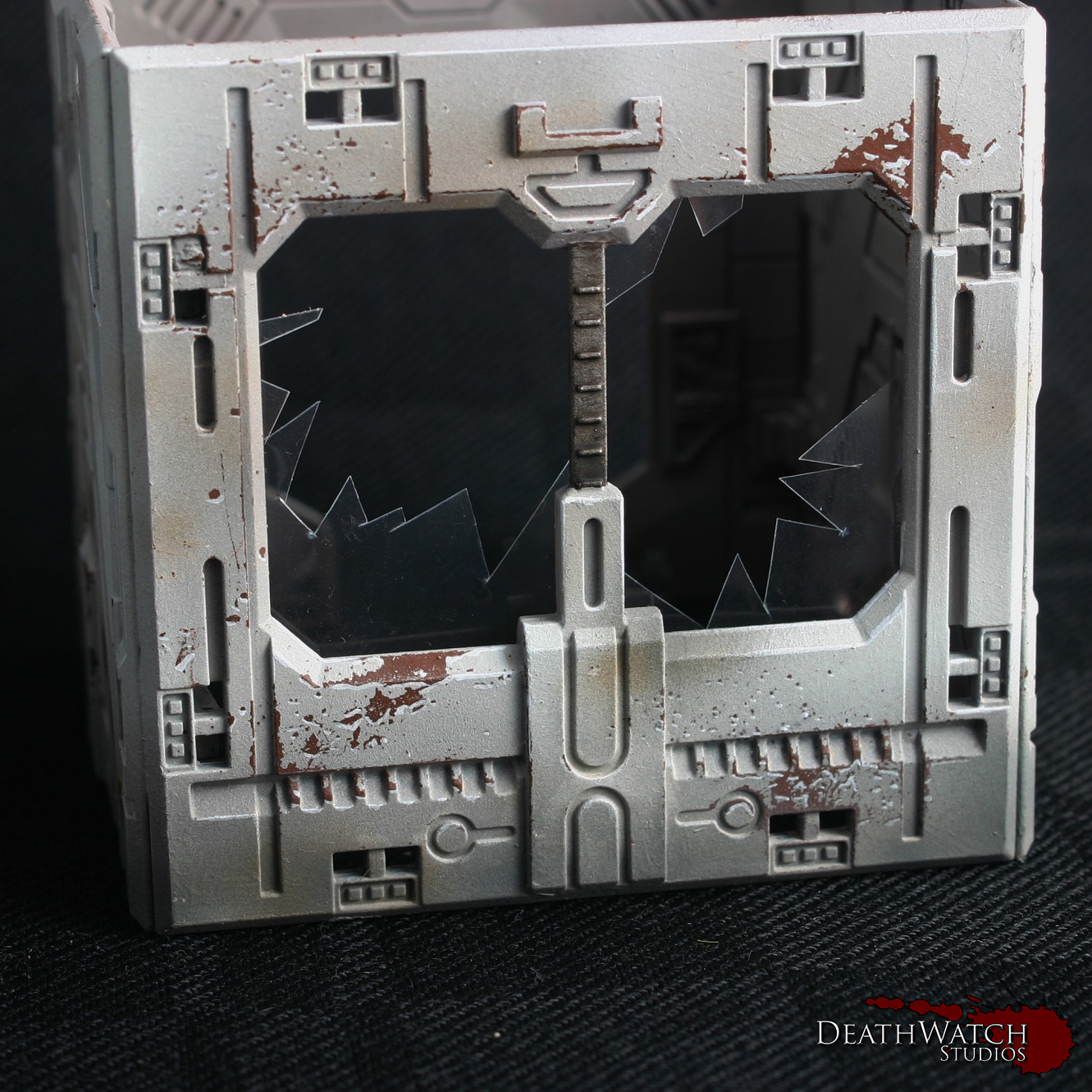
Terrain-guide-17And that, my friends, is how I did my Deadzone terrain. If there is anything you think I may have missed or if you would like me to expand on anything just let me know in the comments.

Look out later in the week for some pictures of the whole lot together 🙂
Tutorial – Deadzone Terrain Part 1

I’ve been working through getting all the terrain painted up for my set of Deadzone and wanted to give everybody a run through as to how I have been doing it from start to finish. This first part will be focusing on the main colour whilst I will be doing another couple of parts later on this week on the rest of the main colours as well as some of the detailing.

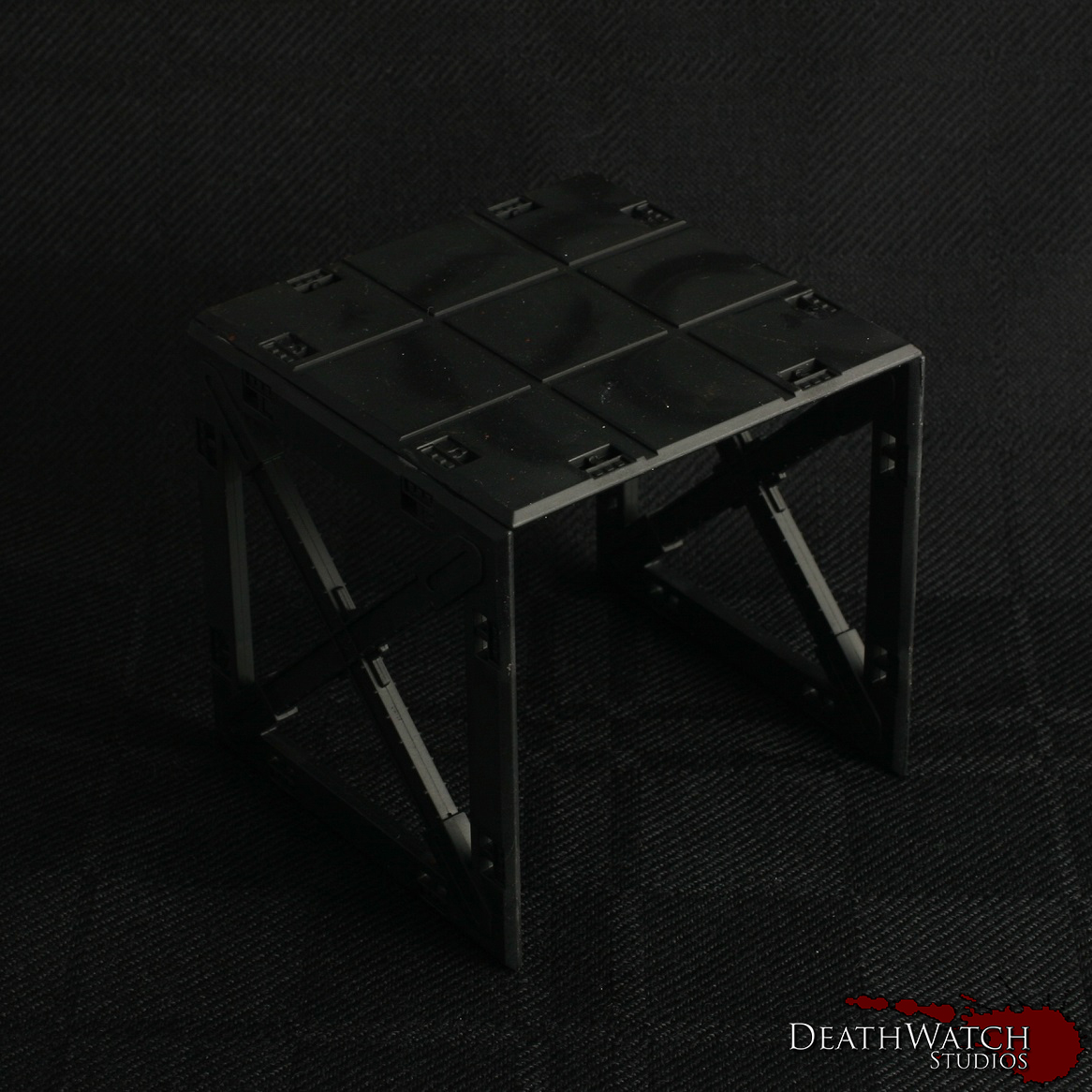
Construction: Before starting the painting I chose to glue all of the buildings, barricades and structures together. Whilst the clips are a useful idea ie being able to dismantle terrain after each battle/build them in different configurations, I felt this would be far too time consuming as well as leading to damaged clips needing replaced on a regular basis. Whilst I still used the clips in most instances to add some strength in areas, some sections where just glued on where there was enough support already (ceilings primarily). The only sections I didn’t glue together were each story of multi story structures. This allowed a bit more flexability when playing games, if for instance someone wanted to place a model inside, they didnt have to squeeze them through a window or door.

Painting: The first stage in getting the buildings painted up was an undercoat. I went with black:

Terrain-guide-1Once this had dried I applied a couple of coats of Doombull Brown until I had a nice flat colour all over:

Terrain-guide-2This is were I began the saltmasking, a technique I’ve used on all of my Rebs and a fair bit over the last few months. The first tutorial I used to get some help with this was found on Youtube, and you can see this here. I also found Whitewolves blog entry for this fairly useful, especially since it was the same kit.

The way I’ve done it was to give the terrain piece a healthy coat of hairspray (just a bog standard, cheap can from the supermarket), and sprinkle some salt over the areas I was looking for the weathering:

Terrain-guide-3I usually left this to dry for at least a couple of hours, just to be sure, but once dry its onto the top coat. This is were an airbrush comes in very handy and I would maybe even go so far as to say it is essential. You need very thin coats on top of the salt in order for you still to be able to remove it easily. So with airbrush in hand I gave the whole thing a coat of Rakkarth Flesh:

Terrain-guide-4This gives the main base colour, but to add a little more definition I then added a highlight coat of Menoth White Highlight but just over the top half of the terrain piece and at a 45 degree angle:

Terrain-guide-5The terrain is now ready to have the salt removed and then onto some proper painting :), which I’ll be going into in the next part.

Dreadball – Hazard Stripe Threat Markings

IMG_5834

Been asked by a few folk how the threat markings on the Gamma Slammers was achieved and felt the easiest way to show people would be to put together a wee tutorial.

So first up here’s the supplies I used:

Clear Hex, Chaos Black, Mechanicus Standard Grey,   Codex Grey, Tau Light Ochre, Yriel Yellow & Skull White

Clear Hex, Chaos Black, Mechanicus Standard Grey, Codex Grey, Tau Light Ochre, Yriel Yellow & Skull White

Before I continue I will state I use a wet pallet, which means if you don’t I’d recommend watering down the colours slightly during each step. Anyway onto the first coat, which is just staright black over the threat area. You may need a couple of coats to get a flat black.

Jpeg

The next stage is adding the base of the stripes. I do this by eye, which can leave them a little uneven in places, but there are many masking tapes out there that would be perfect for getting it just right. I used Tau Light Ochre to paint three stripes on each hex facing(again, a couple of coats may be needed)…

Jpeg

It’s then on to some highlighting. I painted Yriel yellow onto the right(as you’re looking at the hex) and top of each of the lines leaving a little of the base colour showing through on the bottom left corner.

Jpeg

Following this I mixed a wee bit of white into the yellow and added another small highlight in the right top corner of each stripe…

JpegWith that the yellow is done. Now is a good time to go back with the black and clean up any slippages or uneven lines. Then its a similar method to highlight the black. A line of Mechanicum Standard Grey was painted down the right and along the top of each of the black lines…

Jpeg

And to finish it off a wee bit of Codex Grey was painted in the top right corner…

Jpeg

And there you have it. That’s how I painted the threat markings for the Slammers 😀

Dreadball Tutorial – Dreadball Gloves

So, with getting a lot of praise for the Dreadball gloves on the Silver Centurions (Really appreciate it folks :D), I’ve decided to put together a tutorial on how I did them.

The inspiration for giving them a go came from two places, the first was the front cover for Dreadball showing the fancy holo glove. The second was the Nidavellir Flames, a gorgeous Forgefather team. With a good idea in my head form these sources as to what I wanted to do I set out to find some suitable materials. I knew I wanted to have a slight curve to them so my first thought was clear plastic straws (these still might be suitable), but could only find coloured ones in any local stores. I then realised I had some plastic pipettes which I got off ebay, a hundred only cost a few quid:

Pipettes

Pipettes

Turned out they where perfect for the task, so I proceeded to hack ’em apart.

Stage 1

Stage 1

All I needed form them was the top section so using just a pair of scissors I cut them off.

Stage 2

Stage 2

I then proceeded to cut these into strips a little bit bigger than the size needed (worth having the mini handy for this)

Stage 3

Stage 3

Then it was a case of trimming it down to the correct width to fit in the “projector” part of the wrist and curve of one of the ends. Again I just used a pair of small scissors for this.

Stage 4

Stage 4

Next I curved off the opposite end, making sure I cut it to give the desired length. On my minis I made the gloves on the strikers about 150% the size of the ones on the jacks, just to make them a wee bit different but I also thought the strikers variation would be that little bit better. At the end of the day the length is up to you, so long as it fits onto the model 🙂

Paints used

Paints used

Next up was painting them. Above are the colours I used for mine, but I recommend going for a colour that will compliment your team. All you need is a midtone, a lighter version of this, white and lahmian medium.

Stage 5

Stage 5

To start the painting I used Caledor sky right around the end of the glove coming up to where it joins at the projector. The best way to do this, and the following highlights, is using just the flat of the brush against the edge of the plastic.

Stage 6

Stage 6

Next was a 1:1 mix of Caledor Sky and Ice blue, going around the edge again but leaving a small section of the original colour near the projector end.

Stage 7

Stage 7

Next was the same again but with pure Ice Blue and again leaving a little of the last colour showing.

Stage 8

Stage 8

And finally for the edge was a 1:1 mix of Ice Blue and White, just on the top most curve.

Stage 9

Stage 9

The last paint to add is to the projector end. I wanted to leave this section clear to show the innards of the projector showing through, but because I needed to use superglue to affix them, this left the white residue showing all over the glove. This was done with a 2:1 mix of Caledor Blue and Lahmian Medium. Make sure your brush strokes are going from the left to right (using the picture above), as this means the strongest of the paint will be at the projector end.

Stage 10

Stage 10

Next is the same but with a 2:1 mix of Caledor sky/Ice Blue and Lahmian Medium. Just as before, leaving some of the original colour showing at the edge.

Stage 11

Stage 11

Next is 2:1 mix of Ice Blue and Lahmian Medium.

Stage 12

Stage 12

And finally the edge highlight of 1:1 Ice Blue and White. Then all you need to do is stick it onto the mini 🙂

And there you have it, a simple but effective way to give your models some Dreadball Gloves. If you have any questions or anything was not clear in the above please let me know and if you give it a go I would love to see your results 😀